

Development of a technical specification for an operational production management information system
Read more ↗Projects
Applied systems · print production
Planning a packaging run
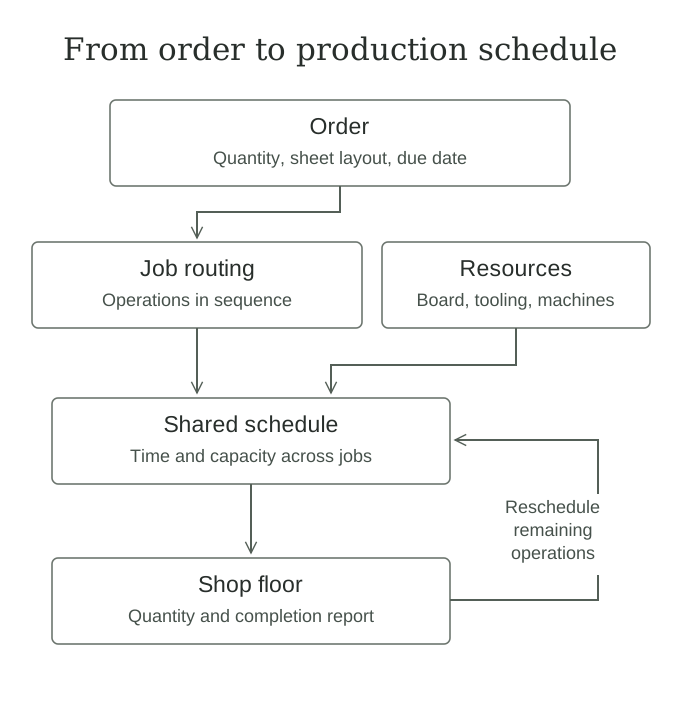
A customer orders a quantity of cartons for a delivery date. On the shop floor, that same order means sheets of board, machine setup and time at several work centres. I.V.A. designed a way to connect the two views through a job routing and a shared production schedule.
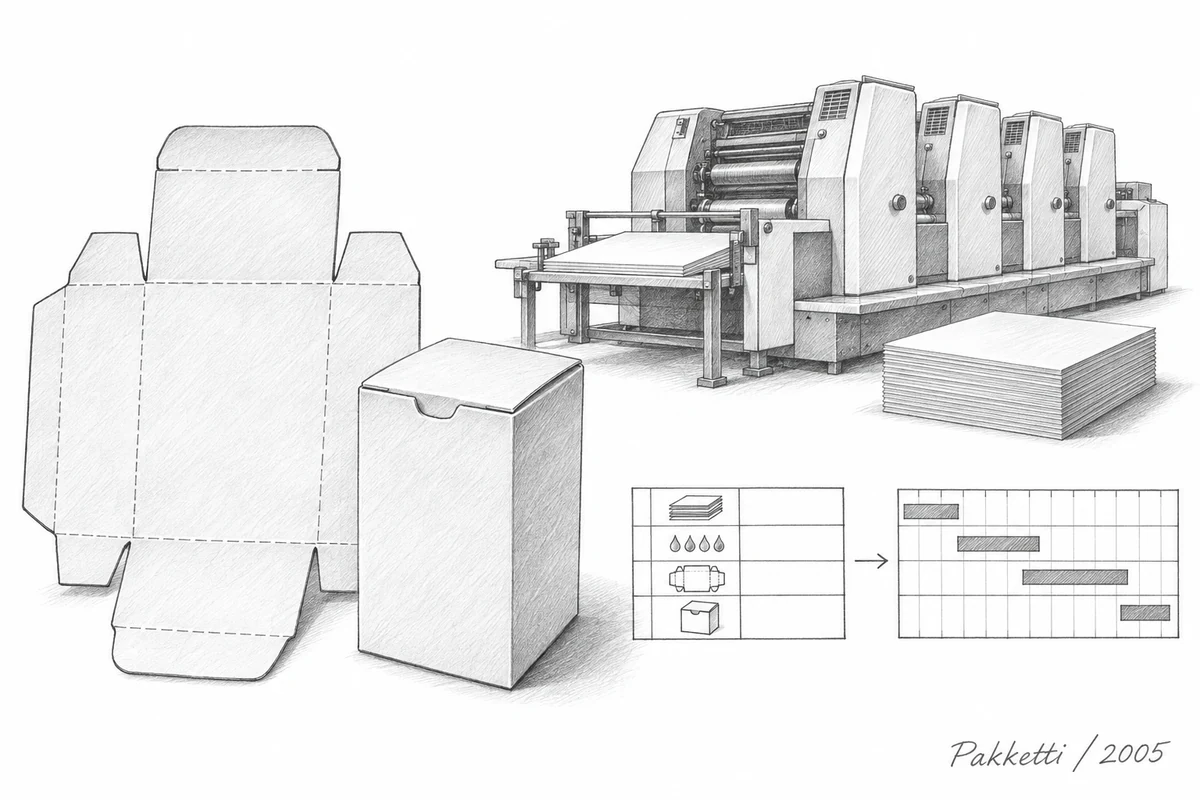
From the company archive
orderjob routingproduction schedule
01
Challenge
One press serves several orders. A larger run or a delay in die-cutting affects other jobs on the schedule. The plant already used spreadsheets to consolidate shift reports. I.V.A. set out to describe how shared capacity could be taken into account when planning and how actual progress could be used to revise the schedule.
02
Solution
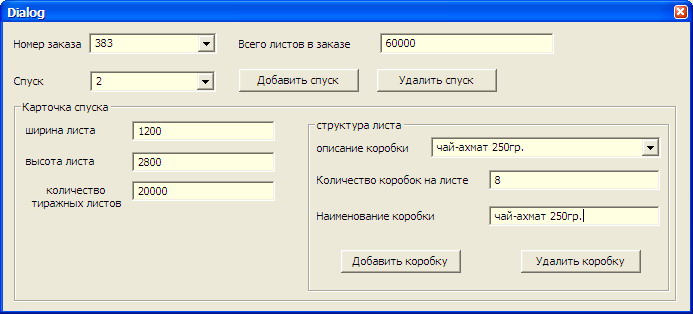
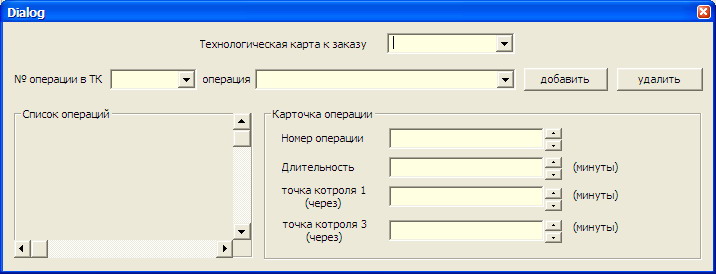
The order was the starting point. For a folding carton, one input was the number of blanks that fitted on a printed sheet. The routing specified the sequence of operations, materials, equipment and estimated times. Setup counted too: before a folding and gluing line could run a batch, it had to be adjusted for that particular carton.
03
How the scheduler would detect a delay
The design specified three checkpoints for each operation. The first drew the scheduler’s attention to an approaching deadline. At the second, a completion report was due. If it still had not arrived at the third, the operation was flagged as a problem. Actual progress was to feed back into the schedule for other orders using the same equipment.
04
Outcome
In April 2005 I.V.A. prepared the technical specification. It defined the order and routing records, scheduling rules, progress checks and workstation forms. The interface mock-ups show the steps from laying cartons out on a sheet to specifying an individual operation.
From order to shop-floor task
Project in the timeline
Start with your challenge