

Development of WorkFin software
Read more ↗Projects
Financial information systems
From a trade to the state of assets.
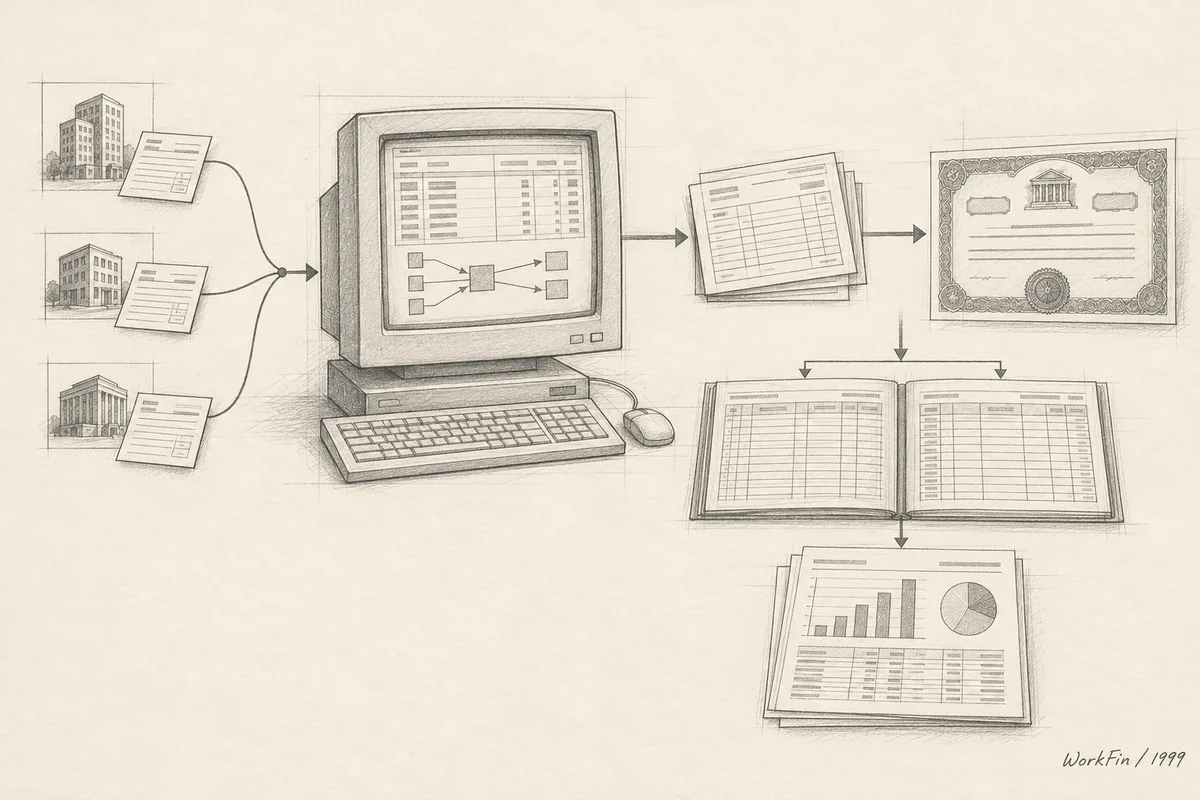
WorkFin was I.V.A.’s information system for recording a settlement firm’s client transactions, cash, securities and obligations. It connected derivatives and spot-market operations in a workflow from orders and trading results to settlement, reporting and accounting-system exchange.
From the company archive
tradesassetssettlement
01
Challenge
A trade affects several related quantities: client cash, securities holdings, contract obligations, fees and trading results. Data comes from different sources and serves different staff. WorkFin’s task was to preserve these relationships and provide a consistent view of assets by client, instrument and trading venue.
02
Our contribution
I.V.A. developed a modular system on the Miracle platform. Reference applications described clients, currencies, instruments and venues; operational modules processed orders, trades and settlements; analytical modules provided reports. They shared a data model with defined relationships and a sequence for processing operations.
03
Solution
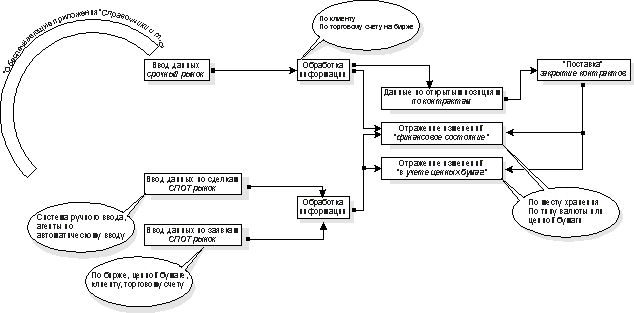
For derivatives, the system accepted a clearing report, allocated trades to accounts and reflected changes in open positions, variation margin and exchange fees. Cash and securities movements were recorded when settlement or delivery became due. On the spot market, processing followed the client order, trade and registration of its result. A trade record provided the basis for a subsequent operation changing assets; recording an order did not itself constitute settlement.
04
Clients and trading accounts
WorkFin distinguished the client from the trading account: several clients could use one account. Their proportional participation was taken into account during trade processing and settlement. Cash was tracked through internal client accounts for each venue, while securities were associated with both instrument and venue. The same model could represent aggregate results and an individual client’s share.
05
Data and integration
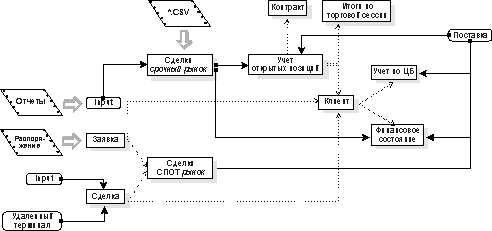
Primary data could be entered manually or received from external sources. Derivatives processing supported CSV reports in the Russian Exchange format; spot-market data could be acquired from the MFB terminal. Reports covered clients, accounts, contracts, securities and periods. Accounting-system exchange was tailored to each firm; integration with 1C:Enterprise 7.5 was a separate assignment outside the standard package.
06
Outcome
Reference, operational and analytical modules were developed to support transactions and asset accounting. WorkFin became one of the financial applications built on Miracle. The program was also registered. The surviving diagrams show how trading data fed into asset states and reporting.
07
Historical assessment
For the late 1990s, WorkFin’s distinctive engineering feature was the organisation of work around a sequence of operations and a shared asset model. It linked market processes, accounted for clients sharing an account and separated initial trade information from settlement consequences. In I.V.A.’s history, the project shows how a component platform was applied to build a coherent financial accounting workflow.
Historical WorkFin diagrams
From company records
Materials
Project in the timeline
Start with your challenge